
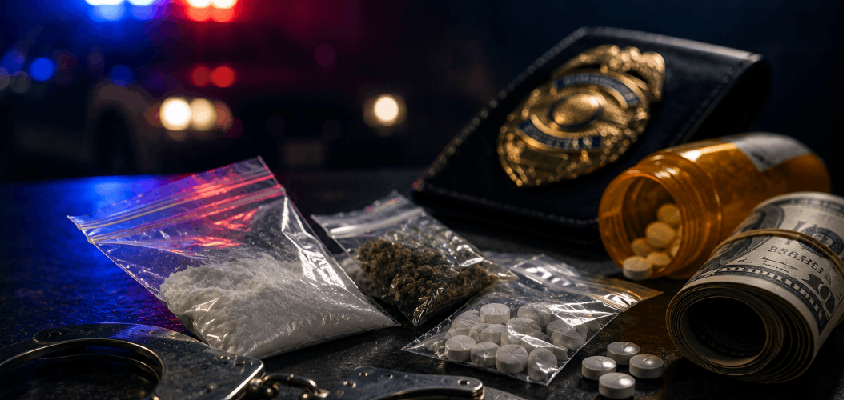
A drug charge in South Carolina can have serious consequences that extend far beyond the courtroom. Whether you’re accused of simple possession, possession with intent to distribute, or drug trafficking, a conviction may result in jail time, substantial fines, a permanent criminal record, and lasting impacts on your employment, education, and future opportunities.
If you’ve been arrested or are under investigation for a drug-related offense, understanding the charges against you and your legal rights is the first step toward protecting your future.
This guide explains the different types of drug charges in South Carolina, what penalties you may face, and how an experienced criminal defense attorney can help build a strong defense.
Understanding Drug Charges in South Carolina
South Carolina law prohibits the possession, manufacture, distribution, trafficking, and sale of many controlled substances.
Drug charges generally fall into several categories depending on the type of substance, the amount involved, and the circumstances surrounding the arrest.
Common controlled substances include:
- Marijuana
- Cocaine
- Methamphetamine
- Heroin
- Fentanyl
- Ecstasy (MDMA)
- Prescription medications without a valid prescription
- Other controlled narcotics
Each case is unique, and the specific charge can significantly affect the potential penalties.
Drug Possession Charges
Possession is one of the most common drug-related offenses.
A person may be charged if law enforcement believes they knowingly possessed an illegal controlled substance.
Possession may be:
Actual Possession
The substance is found directly on your person, such as:
- In a pocket
- In your hand
- Inside a backpack you are carrying
Constructive Possession
You may also face charges even when drugs are not physically on you if prosecutors believe you had knowledge of and control over the substance.
Examples include drugs found:
- Inside your vehicle
- In your home
- In shared living spaces
- In personal belongings
Constructive possession cases are often more complex and may require careful legal analysis.
Possession With Intent to Distribute (PWID)
A more serious charge is Possession With Intent to Distribute (PWID).
Unlike simple possession, prosecutors allege that the drugs were intended for sale or distribution rather than personal use.
Evidence that may lead to this charge includes:
- Large quantities of drugs
- Multiple packages or baggies
- Digital scales
- Large amounts of cash
- Text messages or phone records
- Packaging materials
Even if no actual sale occurred, prosecutors may pursue distribution charges based on circumstantial evidence.
Drug Distribution Charges
Distribution involves the alleged sale, transfer, delivery, or furnishing of illegal drugs to another person.
Unlike possession, these charges focus on the alleged act of supplying controlled substances.
Distribution offenses often carry substantially harsher penalties than simple possession.
Drug Trafficking Charges
Drug trafficking is among the most serious drug offenses in South Carolina.
Trafficking charges are generally based on the quantity of controlled substances involved rather than whether the drugs were actually sold.
Depending on the circumstances, trafficking convictions may include:
- Mandatory minimum prison sentences
- Significant fines
- Lengthy incarceration
- Enhanced penalties for repeat offenses
Because trafficking laws are highly complex, early legal representation is especially important.
What Happens After a Drug Arrest?
Although every case is different, the criminal process typically includes several stages.
Investigation and Arrest
Law enforcement may conduct:
- Traffic stops
- Search warrant executions
- Controlled purchases
- Surveillance operations
- Anonymous tip investigations
If officers believe probable cause exists, an arrest may follow.
Booking
Following arrest, officers generally:
- Take fingerprints
- Photograph the accused
- Record personal information
- Document the alleged charges
Bond Hearing
Depending on the charges, a judge may determine:
- Whether bond will be granted
- Bond conditions
- Release requirements
Court Proceedings
Your case may involve:
- Preliminary hearings
- Discovery
- Negotiations
- Motions
- Trial if necessary
Throughout this process, your attorney can protect your constitutional rights and advocate on your behalf.
Your Constitutional Rights Matter
Every person accused of a crime has important constitutional protections.
These include the right to:
- Remain silent
- Be represented by an attorney
- Be presumed innocent until proven guilty
- Receive a fair trial
- Challenge illegally obtained evidence
- Confront witnesses against you
Understanding and exercising these rights can significantly affect the outcome of your case.
Can Police Search Without a Warrant?
Not always.
Although certain exceptions exist, law enforcement generally must follow constitutional requirements when conducting searches.
Potential legal issues may involve:
- Illegal traffic stops
- Unlawful vehicle searches
- Improper home searches
- Invalid search warrants
- Lack of probable cause
- Unlawful consent searches
If evidence was obtained unlawfully, your attorney may seek to have it excluded from court.
Possible Penalties for Drug Charges
The consequences depend on numerous factors, including:
- Type of controlled substance
- Quantity involved
- Prior criminal history
- Location of the alleged offense
- Whether weapons were involved
- Whether minors were present
Possible penalties may include:
- Jail or prison time
- Significant fines
- Probation
- Community service
- Mandatory treatment programs
- Driver’s license consequences
- Permanent criminal record
Certain felony convictions can also affect voting rights, firearm ownership, professional licensing, and future employment opportunities.
Possible Defense Strategies
Every criminal case is unique.
Depending on the facts, a defense attorney may evaluate issues such as:
Illegal Search and Seizure
If police violated constitutional protections during the investigation, key evidence may be challenged.
Lack of Possession
Simply being near illegal drugs does not necessarily establish possession.
The prosecution must prove the required legal elements beyond a reasonable doubt.
Lack of Knowledge
In some situations, a person may not have known illegal substances were present.
Knowledge is often an important issue in possession cases.
Problems With Evidence
Your attorney may examine:
- Laboratory testing
- Chain of custody
- Police procedures
- Witness credibility
- Video evidence
- Search documentation
Errors or inconsistencies may affect the strength of the prosecution’s case.
What Should You Do If You’re Charged?
If you’re arrested or believe you’re under investigation:
Remain Silent
Avoid answering questions without legal counsel.
Do Not Consent to Searches
Remain respectful, but understand your constitutional rights.
Preserve Evidence
Save:
- Text messages
- Receipts
- GPS records
- Surveillance footage
- Witness information
These materials may become valuable later.
Avoid Discussing Your Case
Do not post about your arrest on social media or discuss the case with others.
Contact an Experienced Criminal Defense Attorney Immediately
Early legal intervention often provides the greatest opportunity to protect your rights and begin preparing your defense.
Frequently Asked Questions
Possession generally involves having control of illegal drugs for personal use, while distribution involves allegedly selling, transferring, or intending to distribute controlled substances.
Depending on the evidence, procedural issues, and facts of the case, charges may sometimes be reduced or dismissed. Every case is different.
Possibly. Prosecutors may attempt to prove constructive possession, but they must establish the required legal elements. An experienced attorney can evaluate the specific circumstances.
Even innocent individuals can unintentionally make statements that are misunderstood or used against them. It’s generally advisable to exercise your right to remain silent until you’ve consulted with an attorney.
Why Hiring an Experienced Criminal Defense Attorney Matters
Drug cases often involve complex constitutional issues, scientific evidence, and aggressive prosecution.
An experienced attorney can:
- Review police reports and evidence
- Challenge unlawful searches
- Examine laboratory testing procedures
- Identify weaknesses in the prosecution’s case
- Negotiate when appropriate
- Prepare a strong defense for trial
Taking action early can significantly improve your ability to protect your rights and pursue the best possible outcome.
Protect Your Rights and Your Future
A drug charge does not automatically mean a conviction.
The choices you make immediately after your arrest—including remaining silent, protecting your rights, and seeking experienced legal representation—can have a lasting impact on your case.
If you have been charged with a drug offense in South Carolina, don’t wait to understand your legal options. Speaking with an experienced criminal defense attorney as soon as possible can help you navigate the legal process, protect your constitutional rights, and work toward the best possible resolution for your case.